The right daypack is the one you forget you’re wearing.
Fit, access and useful space: a straightforward way to compare daypacks without buying more bag than you need.
About this guide: Practical planning advice to adapt to your route and conditions. Photographs illustrate the subject.
Begin with what you carry
Lay out the items for a normal day outside before comparing packs. Water, food, a layer, rain protection and essentials take up real space. Use that load to judge capacity rather than assuming a larger number is better. A bag that holds everything with a little room to spare is easier to organize than an oversized pack.
Try it with weight inside
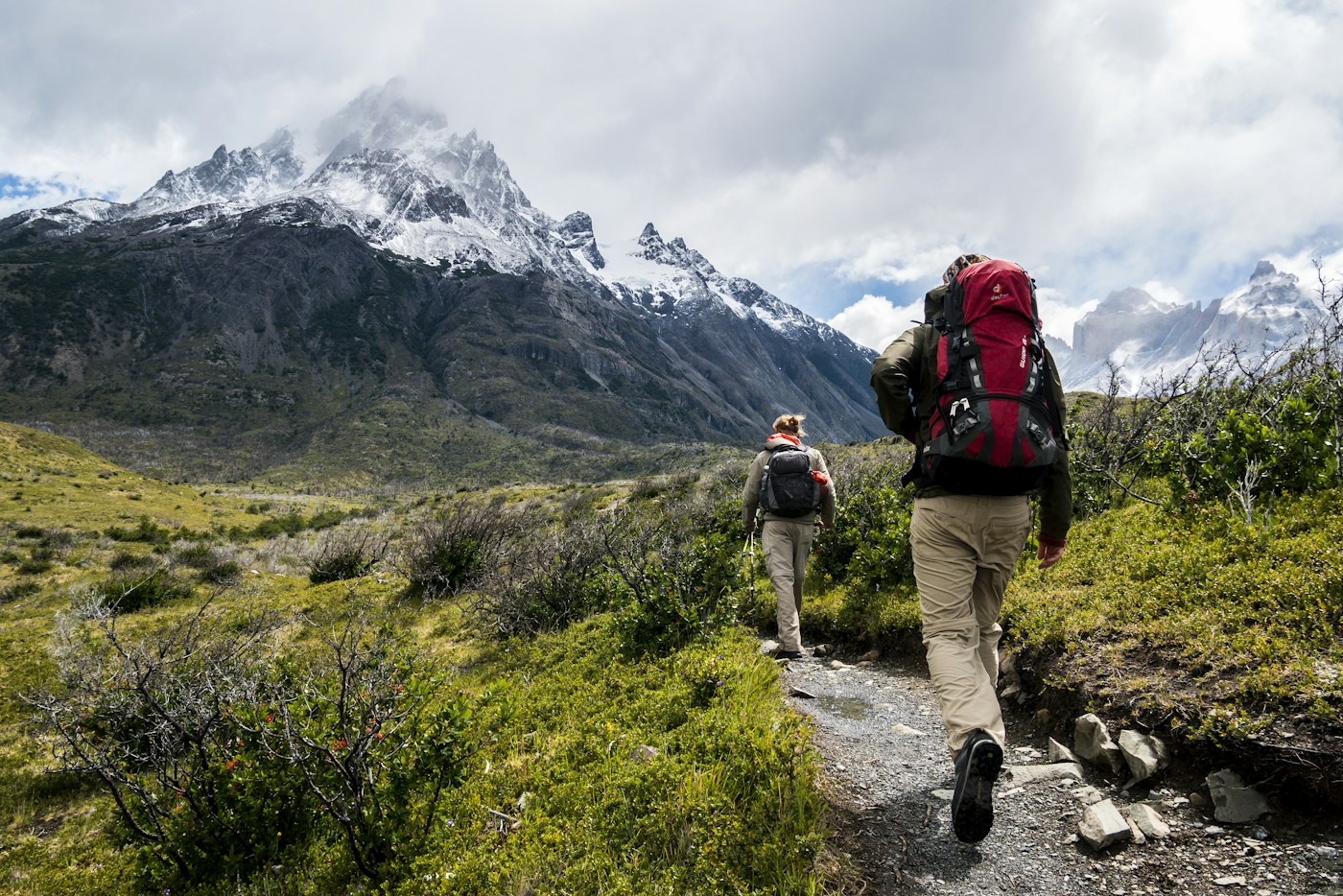
Adjust the shoulder straps and, where present, the sternum strap and hip belt. Walk around, reach overhead and bend to tie a shoe. The pack should stay close without pinching or rubbing. The best fit depends on your body and the load, so a recommendation from someone else is a starting point rather than a guarantee.
Choose an access style
Panel openings make it easier to see everything at once. Top-loading packs can be simple and weather resistant, but small items may disappear at the bottom. External pockets keep water and a shell accessible. Check that the pockets remain useful when the main compartment is full.
Know the tradeoffs
Ventilated back panels may help airflow but can move the load farther from your body. Minimal packs save bulk but offer less structure for heavy loads. Water-resistant fabric does not make a bag waterproof. A liner or dry bag is useful for items that must stay dry.
Before you buy
Check the current manufacturer’s size chart, dimensions, return policy and included accessories. Compare a short list using the same packed load. Keep the pack that feels comfortable and makes the things you need easy to reach, rather than the one with the longest feature list.
A few useful questions
Do I need to buy everything new?
No. Borrowing or using suitable equipment you already own can help you learn what works before making a purchase. Inspect condition and confirm it suits your trip.
Where should I check current conditions?
Use the official land manager’s website and a local weather forecast. Contact the relevant ranger office for route-specific questions.
Further preparation: National Park Service hiking guidance and Leave No Trace principles. General advice should be adapted to local rules and conditions.